
Tatar fairy tales are a rich heritage that is actively changing and adapting with the development of media. In cinema, theater, and literature, they are acquiring new forms, but do they retain their national symbolism and depth to remain relevant for modern viewers and readers? Do they help preserve cultural identity and pass on the wisdom of ancestors to new generations? More details in the article by “Milliard.Tatar”.
Transformation of Tatar Fairy Tales
Tatar fairy tales, transitioning into cinema, theater, and literature, undergo a transformation of form and context. As a rule, the media format sets new tasks: how to convey the image, atmosphere, and moral of the oral folk tradition through visual images, stage action, or an expanded fictional world. At the same time, adaptation often preserves the core of the plot and characters, but reworks the motivation, language, pace, and social context for a specific audience and era.
The transition from oral tradition to written standard in literature is marked by a significant transformation, manifested in the expansion of the narrative world and the deepening of character personalities. Now, heroes acquire internal motivation, experience doubts, and the everyday details of their lives become important elements of the narrative. Explanatory elements are added, intended to reveal the origin of miracles, establish cause-and-effect relationships, and shed light on the backstory of events. Literature begins to actively reflect on cultural unity; periodic remarks about language, customs, and historical context permeate the texts. At the same time, authors strive to preserve folk rhythm and figurative language, sometimes adapting them to fit Russian fairy tales.
These changes are aimed at a readership growing up with a new generation of readers, as well as at preserving and reinterpreting folk memory. Literature in written form becomes a bridge between the past and the present, allowing readers to deeper understand their culture and identity.
Different Shurale in Films
In modern cinema, Tatar fairy tales undergo a deep visual transformation. Films often employ bright special effects, contemporary sets, and creative acting choices, which helps make ancient stories appealing to a young and broad audience. Directors frequently modernize classic stories, adding new characters or changing plot lines to make them more relevant.
For example, in 1992, the film “Shurale” was created at the “Mizgel” film studio, with Kamil Bikmukhametov as director, screenwriter, and concept author. The plot is based on Gabdulla Tukay’s fairy tale: it tells the story of a man going for firewood who meets the forest spirit Shurale and tricks him into sticking his finger into a crack in a log. This film is a major cinematic expression of Tatar mythological themes, retaining the traditional image of Shurale, combining mysticism and amazing worldview ideas.
Also, last year, a full-length film with the same title was released, directed by Alina Nasibullina. In her creation, she drew inspiration from the mythical creature Shurale, giving the image new shades and relevance, combining national motifs with contemporary elements of cinema.
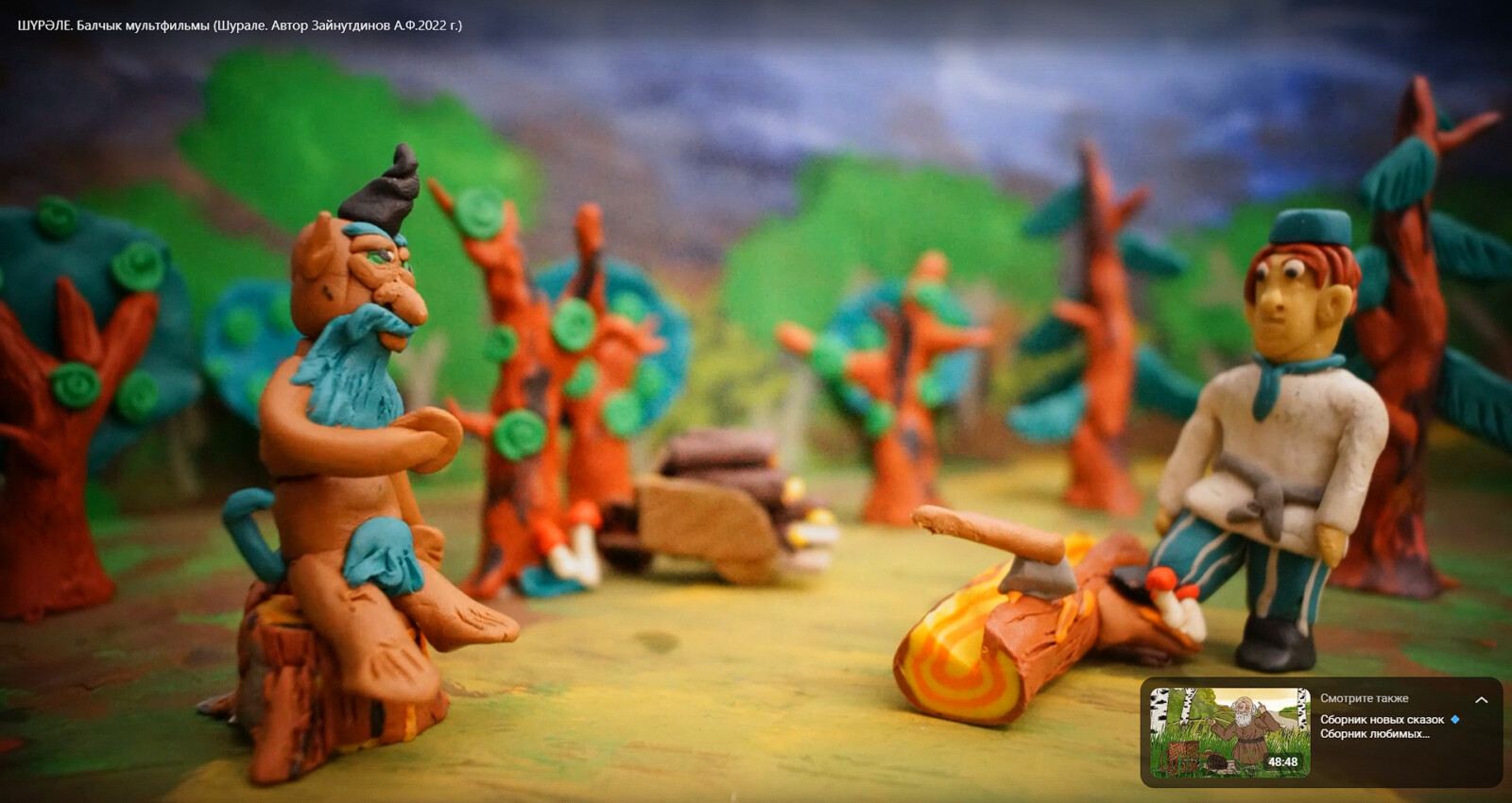
In addition, in 2022, a short film “Shurale” appeared, shot in the village of Novy Kumazan (Mamadysh) based on Gabdulla Tukay’s fairy tale of the same name, as well as a plasticine animated film “Shurale” by director Ainur Zainutdinov. All these works demonstrate that even without directly relying on the fairy tale, the image of the mythical creature continues to live and transform, finding new forms of expression in modern cinematography, while maintaining its connection to traditional Tatar culture and folklore.
As a result, traditional motifs acquire modern shades, but at the same time retain their national specificity — music, symbolism, costumes — which make the films not only entertaining but also culturally rich. This approach helps not only to maintain a connection with cultural heritage but also to present it to a wide audience, expanding the circle of Tatar culture enthusiasts.
From this, the following conclusion can be drawn: in cinema, there is often a desire for a balance between local color and a universal visual language, which allows reaching a wide audience without losing the uniqueness of the story. Modern social context is often introduced into the plot or episodes, touching upon themes of migration, urbanization, and nature conservation, making the film relevant for the viewer. Sometimes new characters may appear, adding drama and making the story more captivating.
Theatrical Productions Based on Tatar Fairy Tales
Theatrical art actively uses the wealth of Tatar fairy tales to create vibrant and rich productions that open new horizons for the visual and emotional embodiment of folk heritage and wisdom. Performances harmoniously combine acting, music, and stage design, creating a unique atmosphere of magic, adventure, and morality. The productions allow viewers of all ages to immerse themselves in the world of fairy-tale characters such as Shurale, Batyr, and the Maiden (Kyz), and enjoy the aesthetics of folk melodies, costumes, ritual objects, and folk traditions. In the process of bringing these stories to life, theater directors often experiment with the plot, making it more modern and relevant – adding social, philosophical, and moral themes that reflect current issues of the time.
What is particularly important, theatrical productions are created primarily for children. The characters are puppet fairy-tale heroes from tales like “The Water Woman” (Su Anasy), “The Girl and the Star” (a work by Fanis Yarullin), “Abugalisin,” and others, which is relevant for the “Ekiyat” Puppet Theater in Kazan. These productions are filled with vivid imagery, kind lessons, and a magical atmosphere, making them especially appealing and understandable for young audiences. This format helps not only to preserve and pass on the rich traditions of folk tales but also to develop in children a love for culture, imagination, and kindness.
Source: milliard.tatar


