
The holy month of Ramadan for Muslims will begin very soon. Why it is necessary to fast during this month, what is forbidden during Uraza, and how to increase your reward – in this article by Tatar-inform.
When Ramadan will begin and how many days Uraza will last
In 2026, the month will begin on February 18 after sunset. On this day, believers will perform the first Tarawih prayer. The fast itself will begin on February 19 and will end on March 19. The duration of Uraza this year will be 29 days.
The Spiritual Meaning of Fasting in Ramadan
Fasting in the month of Ramadan is one of the five pillars of Islam, along with the Shahada, prayer, Zakat (obligatory alms), and Hajj. Fasting during this month is considered obligatory for all adult Muslims. The exception is believers who, for a valid reason, cannot fast. Children, people with serious illnesses, pregnant and nursing women, women who have recently given birth, and travelers are exempt from observing Uraza.
Uraza is not limited solely to abstaining from food and drink. The meaning of fasting lies in spiritual purification, strengthening willpower, showing patience, developing compassion and mercy, and striving to earn the pleasure of Allah.
Furthermore, every good deed performed during this month brings believers a significantly greater reward compared to other periods of the year. This is why, during Ramadan, Muslims strive to show special diligence in worship and good deeds.
What Breaks the Fast
According to the norms of Shariah, it is forbidden for those fasting during daylight hours to:
-
consciously consume food and drink water (if a person does this out of forgetfulness, the fast is considered valid);
-
engage in intimate relations;
-
intentionally induce vomiting;
-
smoke;
-
administer nutritional injections.
What Does Not Break the Fast
While observing the fast, Muslims are permitted to:
-
swallow saliva;
-
donate blood;
-
take a shower, visit a bathhouse, wash, and brush their teeth, avoiding swallowing water;
-
administer injections of medicinal (non-nutritional) preparations.
Making Up Missed Fasts and Paying Fidyah-Sadaqah
If a Muslim misses one or more days of fasting for a valid, yet temporary, reason, they will need to make up the same number of fast days after Ramadan. If a believer cannot fast at all due to health reasons, then for each missed day of fasting, they must pay Fidyah-Sadaqah. In 2026 in Tatarstan, its amount is 450 rubles.
Suhoor and Iftar Times
Suhoor is the pre-dawn meal taken before the time of the Fajr (morning) prayer begins. It is considered Sunnah, so Muslims are recommended not to miss this pre-dawn meal. The end time for Suhoor coincides with the beginning time of the Fajr prayer.
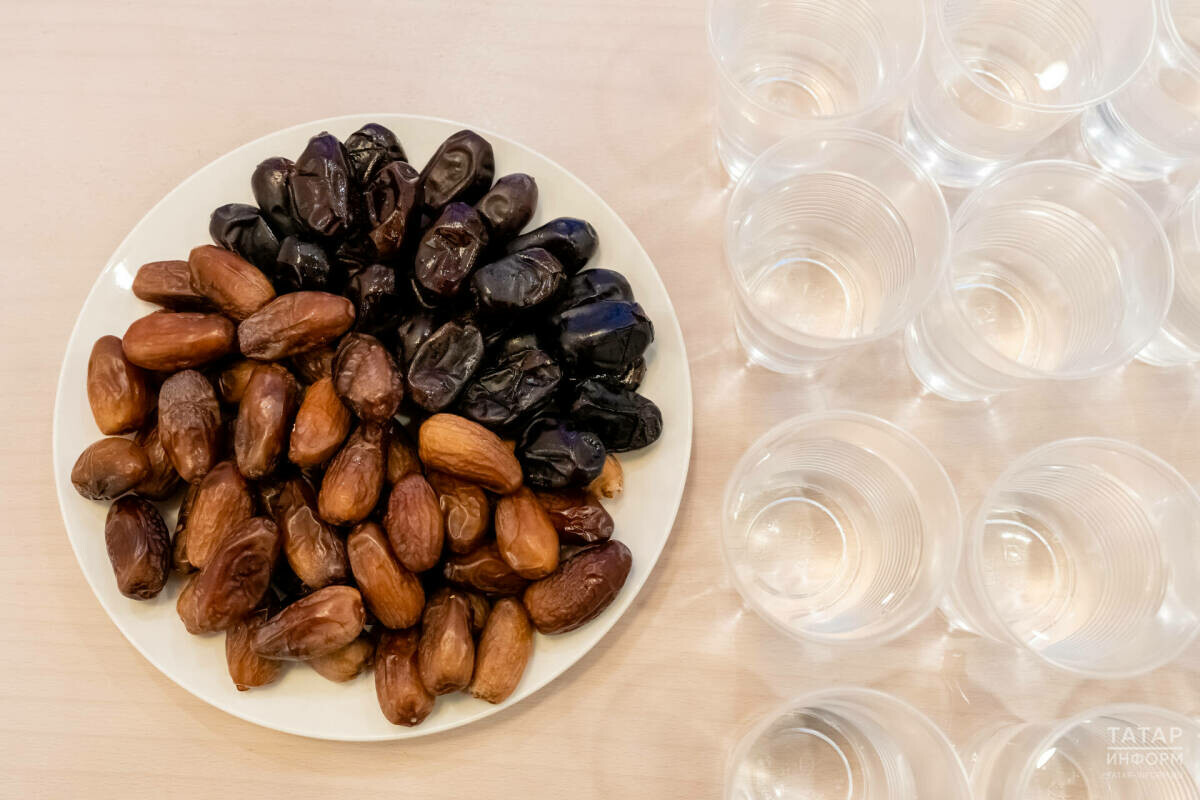
Iftar is the evening meal to break the fast, which is done immediately after sunset and the beginning of the Maghrib prayer time. It is advisable to start the meal without delay, before performing the prayer. It is recommended to break the fast with dates and water, and then proceed to the main meal.
Tarawih Prayer During Ramadan
Tarawih is a special prayer performed exclusively during the month of Ramadan. Believers perform it after the Isha (night) prayer. The Tarawih prayer consists of 20 rak’ahs, which it is desirable to spend reciting the Quran.
It is recommended to perform the Tarawih prayer in a mosque, as a greater reward is given for performing it collectively. In Tatarstan, these prayers will be held in all mosques of the republic.
Umrah in Ramadan-2026
During the month of Ramadan, Muslims who have the opportunity are strongly recommended to perform the minor pilgrimage – Umrah. In a hadith of the Prophet Muhammad, it is said that Umrah performed during Ramadan is equal in reward to Hajj. Therefore, many believers strive to go on the minor pilgrimage specifically during this period.
The Night of Qadr in 2026
The Night of Qadr (Decree/Power) falls during the month of Ramadan. The Quran states that worship and any other good deed performed on this night surpasses in reward the worship of a thousand months (more than 83 years). Therefore, believers spend this night in prayer, reciting the Quran, and repentance.
The exact date of the Night of Qadr is unknown. According to hadiths, it should be expected in the last 10 nights of Ramadan, on the odd-numbered nights. In 2026, the most likely date for it is the night of March 16th to 17th.
Fitr Sadaqah: Amount of Alms in 2026
Before the Eid prayer on Eid al-Fitr, Muslims are encouraged to pay Fitr Sadaqah. The purpose of this alms is to earn forgiveness for minor transgressions committed during Ramadan.
In Tatarstan, the amount of Fitr Sadaqah in 2026 is:
-
200 rubles – for those who possess the Nisab (minimum amount) based on silver – 120,000 rubles;
-
1200 rubles – for Muslims who have the Nisab based on gold – 940,000 rubles.
End of the Month: Eid al-Fitr 2026
The end of the fast will be marked by the holiday of Eid al-Fitr (Uraza Bayram), which will be celebrated on March 20, 2026.
On this day, Muslims perform the holiday prayer in mosques. It is also recommended to dedicate time to communicating with relatives, strengthening family ties, supporting those in need, and performing other good deeds.
Source: www.tatar-inform.ru


