
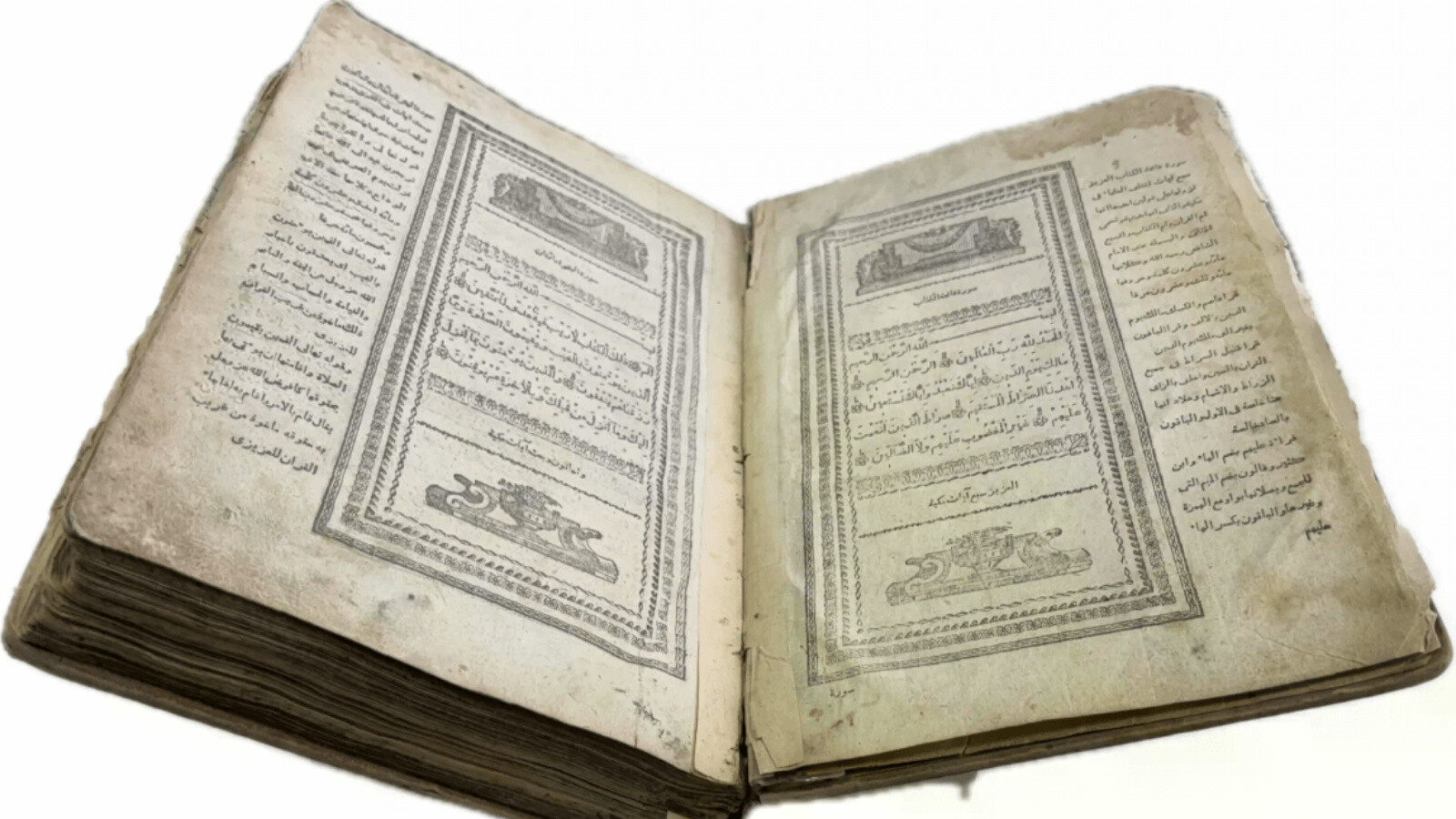
A virtual exhibition titled “Kazan Qurans in the Collections of the Kazan Kremlin” is now available for viewing on the Kazan Kremlin website.
The exhibition can be viewed via this link.
Kazan was the first city to mass-produce printed Qurans, and Kazan’s printing houses set the standard for printing the holy book of Muslims. To tell the story of the phenomenon of Kazan Qurans during the Year when the capital of Tatarstan has also been declared the Cultural Capital of the Islamic World, the Museum-Reserve is presenting this virtual exhibition.
The project is based on 10 exhibits from the collections of the “Kazan Kremlin” Museum-Reserve. This curated selection of Qurans from the 19th and 20th centuries allows for a fascinating narrative about the printing of the Holy Book in Kazan’s printing houses.
The virtual exhibition introduces viewers to the publishers, benefactors, and owners of these books, as well as the evolution of technology and design. Among the various features of each item, attention is paid to provenance: to whom and when the book belonged, and how it came to be part of the Kazan Kremlin’s collection.
The earliest book on display is a “children’s” Quran from 1803. This is one of the volumes from the only print run, which was published in the Asian Printing House in a total of just one thousand copies!
Later Qurans allow visitors to immerse themselves in their history: on the title pages, we find the names of those responsible for the accuracy of the text (Galimjan Barudi, Shigabutdin Marjani, and others), sponsors (Yusuf Apanayev, Ibragim Ishmuratov), and publishers. Dedicatory and ownership inscriptions are handwritten in ink.
The first translation of the Quran from Arabic into Russian was completed in Kazan by G.S. Sablukov, and the exhibition features a copy from one of the first print runs. This edition combines the Kazan typesetting of the Quran with a translation of the meanings into Russian.
The latest Quran in the virtual exhibition dates from 1934. This Quran was printed by Tatar emigrants in Tokyo based on the Kazan typesetting, funded by Muslim communities, and “returned” to Kazan in 2015.
Thus, the online exhibition uses a minimal number of items to tell the story of the enterprise, diligence, and ingenuity demonstrated by our compatriots in the printing of the Quran.
Source: mincult.tatarstan.ru


